UT IN OMNIBUS GLORIFICETUR DEUS.

UT IN OMNIBUS GLORIFICETUR DEUS.

UT IN OMNIBUS GLORIFICETUR DEUS.

UT IN OMNIBUS GLORIFICETUR DEUS.

UT IN OMNIBUS GLORIFICETUR DEUS.

Thursday, May 5, 2011

Boracay Atis barred in their ancestral land

Philippine Daily Inquirer/OPINION/by Ma. Ceres P. Doyo
Filed Under: indigenous people, Tourism, Conflicts (general), Laws
(Most Read)

PUT ASIDE bleeding-heart sentimentalism and romanticism. Here are questions that are crying out for answers:
Why are the Atis, who have lived in Boracay long before the paradisiacal island became world-renowned, being barred from occupying a piece of land that the government turned over on Feb. 11, 2011 to their community by virtue of a Certificate of Ancestral Domain Title (CADT) made possible by the Indigenous Peoples Republic Act (IPRA)?
Why can’t an indigenous community of 46 families whose ancestors called the island their home long, long before the island became a tourist haven, occupy a tiny 2.1-hectare area that has been designated as their home?

Why does this area called Dead Forest, which has been declared inalienable and officially declared to be the ancestral domain of the Atis, have non-Ati claimants who do not want to let go?

The Atis of Boracay are up against powerful claimants with business interests on the island known for its powder white sand and, in the last decade or so, for being a crowded party island and a hidden paradise no more.

They are called Ati in the Visayas, while their counterparts in Luzon are called Aeta, curly haired, shorter and slightly darker versions of our mainly Malay-Chinese-Hispanic selves. They are said to be the original aborigines of our islands. They were here when time began, so to speak, before the Malay, Chinese and Spanish arrivals. But I leave this subject to the anthropologists and historians.

Thursday, April 28, 2011

Pope John Paul II launched my writing career


(This piece came out on page 1 of the Inquirer in 1995 when Pope John Paul II visited the Philippines for the second time. Here is a shortened version to celebrate his beatification on May 1, 2011.)

WELL, AS they say, everyone has a story to tell. I have mine. And I might as well tell it too.

The first feature story I ever wrote in my life got me and the magazine editor in big trouble with the Marcos dictatorship. Six months later, on Feb. 21, 1981, Pope John Paul II handed me a rock trophy for what I wrote.

I was not even a journalist at that time. I was working with a church-related human rights organization. My background was clinical psychology and for some time my world was psychometrics and counseling, until I became a religious novice and metamorphosed into a human rights worker. That was when the writing began.

When the Pope came in 1981, I covered his visit for a news agency, and I was able to see the Pope up close. But it was during the closed-door Catholic Mass Media Awards ceremonies (held at the Radio Veritas auditorium) that I was able to come even closer.
I was covering the affair and had to dress formally because I was also a nominee. The Pope came in a helicopter. His address to communicators in Asia was aired live. Then the Pope disappeared for a while to meet with persons with leprosy. The Pope returned to the stage and the winners’ names were called.

I was not dumbstruck when I heard my name. Not that I was so sure of my writing. I just felt a very calm soothing feeling sweeping over me. It was like everything was in slow motion.
Former UP President Salvador P. Lopez and Bishop Justino Ortiz were onstage to assist His Holiness. I went up the stage and kissed the Pope’s hand. Then he handed me the trophy. I felt his hand tighten around my head. The Vatican photographer clicked twice.
What did this mean? What was God telling me? I asked myself. What was written on the plaque gave me goose bumps all over. “In recognition of outstanding achievement in interpretive reporting that dramatized the implication of government action which impinged upon the culture and survival of an ethnic community. Written with a depth of human understanding and a passion for the truth.” I wanted to sing the Magnificat.

The feature I wrote was on Macliing Dulag, now immortalized as a Cordillera great, the chief of the Butbut tribe, the slain Kalinga brave who opposed the Chico River Dam. (Last Sunday, April 24, 2011 was the 30th anniversary of his death.) Because of that story (with great photos that I took) my editor Letty J. Magsanoc and I were grilled separately by the defense department. A photo of myself being castigated before a panel of military men led by Defense Undersecretary Carmelo Barbero landed on the front page of the biggest newspaper then. Police reporter Ramon Tulfo covered the interrogation. I have a transcript of that interrogation.

I still have copies of the newspaper (July 1980) which had on its front page four photos—those of the Pope wiping tears away while meeting with lepers in Portugal, Imelda Marcos in Japan and Miss Philippines Chat Silayan winning third in an international beauty contest and myself. What company, I thought.

Anyway, a few weeks after the 1981 CMMA and the Pope’s visit, I received two big color photos of myself with the Pope. It came from the Vatican.

And the writing went on and on.

Sunday, April 24, 2011

A glimpse of Paradise Lost

Sunday Inquirer Magazine/FEATURES/by Ma. Ceres P. Doyo
Filed Under: People, Environmental Issues, Natural Resources (general)

HE knew the wilderness and its many secrets. Each leaf, each stem, each trunk spoke to him in ways ordinary humans might not hear. He hearkened to them and gave them names. From under the huge canopy of green that was his second home, he would emerge, carrying with him evidence of rare and amazing life. He had glimpsed paradise. The world, he thought, needed to know about the treasures hidden in these endangered vastness.
But Filipino botanist Leonardo L. Co was gone before he could share this bounty. Killed by military forces in the wilds of Kananga, Southern Leyte on Nov. 15, 2010, he left a void crying out to be filled. Who will follow in his footsteps in forests primeval?
But his family, friends and colleagues are not frozen in mourning. If they cannot totally fill Leonard’s mountain shoes, they are at least attempting to take the path less-traveled that the botanist had trod for many years. They, too, are heeding the call of the wild, embracing a world that the consummate scientist and lover of plants had considered as the place to be.

That was how it was in the days that ran up to Easter and Earth Day this year. To celebrate the botanist’s life, a Leonardo Co Trail was opened somewhere in the Sierra Madre mountain range bordering Palanan, Isabela. Going to Palanan alone takes some guts, as it is on the remote “other side” of Luzon, separated by awesome mountains and the so-called Last Great Forest.
Weeks before, an advance reconnaissance team (see photo) composed of University of the Philippines (UP) Mountaineers and their Dumagat guides prepared the way for the “Palanan Co Sierra Madre Trek” that was to follow during Holy Week, starting April 15.

Here’s a recon team member’s message sent by satellite phone: “5 days of trekking, 4 soaking wet nights, 30 mins of sunshine, 15 squares of canned sardines, 2 river eels, 7 leech bites, 3 foot blisters, more than a dozen river cross, countless slips and slides, and to top it all off, 4 very awesome Dumagats and 6 funny mountaineer friends, makes for 1 great and unforgettable experience, all for 1 very special botanist. And the best part is, we’re only halfway there.”

That was where this “1 very special botanist” had wished some of his ashes would be strewn. By now, Leonard’s wishes will have been fulfilled. His resting place: his “field lab,” the 16-hectare Forest Dynamics Plot in Palanan, begun in 1994 and of which Leonard was co-investigator (with Drs. Perry Ong and Daniel Lagunzad). In this area, some 335 species of plants have been identified. A trail was opened and named after him. (The other existing trails are the Aguinaldo, Carabao and Bisag Trails.) Some 30 mountaineers, friends and family members braved the wilds to honor him. Darwin Flores was trek organizer while veteran explorer-mountaineer and artist-teacher Bobby Acosta was trek leader. ROX Outdoor Gear was the main sponsor.

Thursday, April 21, 2011

An Ofw's Via Crucis

Philippine Daily Inquirer/OPINION/by Ma. Ceres P. Doyo
Filed Under: Overseas Employment, Religion & Belief

THIS HOLY Week, put aside the good old devotional prayers and walk the road to Calvary via the path of the overseas Filipino workers. Carry their burden, wear their crown of thorns, drink from their empty cups, feel the stripes on their backs and the fever on their brows. Broil in the desert sand, be tossed at sea, descend to the pit of their loneliness.

Most of all, let us enter the cave of their hearts.
For many Filipinos, the way to jobs overseas has been a road to Golgotha. Into the valley of death many have been led, into lives of misery and shame not a few have been lured.
With them, we cry, de profundis, ahhh, Father, have you forsaken us? How have we come to this?
                                                              +++
We adore Thee, O Christ, and we bless Thee. Because by Thy holy cross Thou hast redeemed the world.

First Station: Jesus is condemned to death. A poor Filipino sells properties, borrows money at high interest rates so he can go abroad and be employed. Even before he leaves, his family is already deep in debt.

Second Station: Jesus carries His cross. The labor recruiter exacts a high fee, but the poor worker has no choice. The OFW-to-be leaves, carrying with him the burden of his family’s debts. How long will he slave away in loneliness in a foreign land so his family can live a better life? Will he come home to find his family intact?

Third Station: Jesus falls the first time. The poor Filipino farm girl arrives in a foreign land and is soon snatched by her strange employer, then taken to a home where she finds herself alone and with no one to share her burdens. Held a virtual prisoner, and having little contact with the outside world, she imagines the worst that can happen to her. She is despondent.

Thursday, April 14, 2011

Cashing in on poverty

Filed Under: Poverty, Entertainment (general), Television, child abuse, Crime

CAN WE really believe, as we are made to believe, that the live TV shows that draw in the poor and feature the poor for entertainment purposes in exchange for easy money were conceived with altruistic motives and not for huge profits?

In the wake of the recent furor over the “Willing Willie” TV show that featured what looked like a discombobulated six-year-old boy gyrating like a macho dancer and other similar display of abilities (by toothless senior citizens, for example) in exchange for monetary rewards, poverty is always invoked as the reason why.

Today, live shows featuring kids are not anything like the highly rated “Kids Say the Darndest Things” of yesteryears.

Poverty is supposed to be the reason shows like “Willing Willie” on TV5 and its predecessor “Wowowee” on ABS-CBN’s Channel 2 (before the debacle that caused host Willie Revillame to leave and move to TV5) exist. Poverty is the reason legions of poor people aspire to participate in game shows and entertain the audience with all sorts of antics that no one in his or her right mind would want their bedraggled or aging parents to do on television.

Poverty or profit?

Poverty is what Revillame invoked when he justified the format of his show. You, he lashed out at his critics, what have you done for the poor? Oh, the many things he had done for the poor, the multi-millionaire show host said, and his legion of fans that stand by him is proof of this. What indignities are his critics talking about, his supporters ask, what oppression, what human rights violations? The poor, they say, love the show. They dream to participate and go home with oodles of money—for a song, a dance, a “wrong mistake” that sends the audience laughing at their expense.

Right after the 2006 “Wowowee” anniversary stampede that killed more than 70 people, Revillame was quoted as saying, “Gusto lang naming sila mapasaya.” (All we wanted was to make them happy.) And so the poor innocents who were there for the thrill met their tragic end.

“I saw something very wrong, very, very wrong,” Chief Supt. Querol said then, his voice almost cracking, after he saw people stepping over the dead and clamoring for raffle tickets.

Watching the fact-finding investigation at that time, I couldn’t help noting that the line of questioning focused mainly on where, when and how the tragedy happened, the security lapses, the physical layout of the place, the numbers. It was all about crowd control. No one asked about the essence of the “Wowowee” show, its purpose, sponsors, audience. Did the show producers even remotely realize that the show was playing Pied Pier and might be leading innocents to a tragic end? For the investigators it seemed enough that they knew that it was some kind of daily game show that raffled off huge prizes in cash and in kind.

I had hoped then that if a Senate hearing was going to be conducted “in aid of legislation,” the parties concerned would look into the nature of TV shows. Not to curtail media freedom, but so that the interest of viewers and the participating public would be protected. Not just from physical dangers but from the non-physical too.

Were lessons learned?

Thursday, April 7, 2011

Toxic sea: NIMBY


Filed Under: Disasters (general), Advice, Nuclear accident, Safety of Citizens

ALARMISTS AND doomsday soothsayers are abroad in the land in the aftermath of the disaster several weeks ago that devastated Japan, considered the most disaster-prepared country in the world. Many of us are wont to say: Think how we would all be had the triple whammy happened in our disaster-prone country where disaster preparedness is way behind other countries. Only after “Ondoy” and “Pepeng” in 2009 and the tragedy in Japan did we begin to be personally prepared, that is, right in our own homes and small communities. National is another story.
I am talking about ordinary citizens having “I am ready” bags and emergency kits in their homes and cars. I have mine. I even have a reflectorized net vest in shocking green, which I hope I will not have to use at all. I was an outstanding Girl Scout in my youth, by the way, and I still live by the GS motto, “Be prepared,” and the GS slogan, “Do a good turn daily.” I should not be shy to broadcast this.
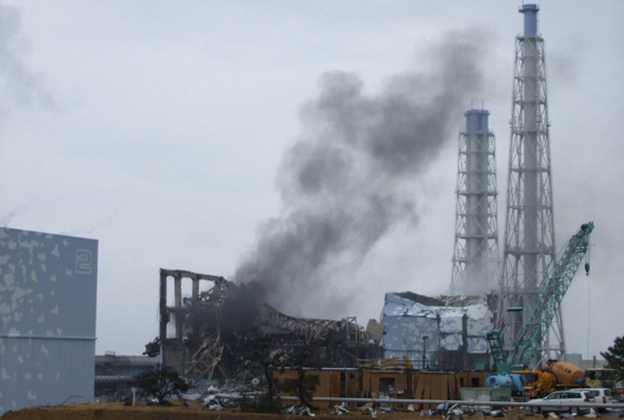
What worries many people now is the aftereffect of the damage in the nuclear plants in Fukushima and the radioactivity that could reach distant places. Japan, a news report said the other day, is going to release toxic water into the sea. “Tokyo Electric Power Co. (Tepco) will release almost 11,500 tons of water contaminated with low levels of radiation from the Fukushima Daiichi Nuclear Power Station, as workers struggled to contain the increasing amounts of dangerous runoff resulting from efforts to cool the plant’s damaged reactor.”

Japan’s chief cabinet secretary Yukio Edano, the top government spokesperson, told reporters in a televised press conference, “We have no choice but to release water tainted with radioactive materials into the ocean as a safety measure.” Tepco has been pumping tons of water into the four reactors at Fukushisma in order to prevent a meltdown, and this water has become radioactive. And to free up space, this “seriously radioactive” water has to be released into the sea. An additional 1,500 tons of radioactive water will also be released from two reactors.

This radioactive water will go into the Pacific Ocean which Japan shares with the Philippines, several Asian countries and even the United States.

The first thing that comes to mind is, what happens to our food that comes from the sea? What are the health hazards? And what about tourism and tourists who are lured by our Pacific sand, sea and skies?

Thursday, March 31, 2011

Lethal


MY TENSES are getting mixed up. Present or past? Are the convicts still waiting to die, are they dying, or are they already dead?

By now we should already know the fate of the three overseas Filipinos workers (OFWs) who had been condemned and scheduled to die by lethal injection in China on Wednesday. Dying or being killed by lethal injection seems less brutal than OFW Flor Contemplacion’s execution in 1995 in Singapore, which was by the rope. But death as a punishment by any method is brutal, merciless and inhuman. Many democratic nations, the Philippines included, have done away with it. But not China.
I watched someone die by lethal injection in 1999 when the death penalty (which had been outlawed during the administration of President Cory Aquino) was re-imposed and enforced for a few years during the Estrada presidency. I have written about the experience and don’t want to recall the details and write about it again. Let me just say that it looked like it was straight out of a movie, except that it was real and I was seated a few feet from the sobbing family of the convict and a few meters from the gurney on which the convict was strapped. Good thing there was a glass panel that separated the death chamber and us in the mini gallery.
It is a few minutes to the execution of the three OFWS while I am writing this piece and that scenario at the national penitentiary 12 years ago is beginning to play in my mind. I feel uneasy. I woke up at 4 a.m. and I was hoping to learn from the early morning TV news that the executions were not going to push through or have been deferred. I was disappointed. I prayed—for whatever purpose it may serve.

As a country that continues to send OFWs in the millions, we are never done with our collective mourning for our compatriots who toil in distant places—in deserts and oceans, homes and hospitals, factories and farms, theaters and hotels —and who lose their lives to disasters, disease, accidents, pirates, crime, wars and to their host countries’ lethal laws.

And so it has been this way these past months: earthquake in New Zealand, a package of earthquake, tsunami and nuclear disaster in Japan, war and strife in Egypt, Libya, Tunisia, Yemen, Bahrain, Syria, Jordan, etc., pirates in Somalia, death penalty in China. The list goes on. The Overseas Workers Welfare Administration and the Department of Foreign Affairs, NGOs and church groups serving OFWs can hardly catch their breath, and the embassy personnel in beleaguered countries are under siege for help, protection and intervention.

Sunday, March 27, 2011

More than just a library of her own

Sunday Inquirer Magazine/FEATURE/by Ma. Ceres P. Doyo

Filed Under: Lifestyle & Leisure, Books, Travel & Commuting, Women

“A ROOM of her own” is what it used to be. But why stop there? Why indeed, when she could have an entire home to herself. A library, gallery and archive all hers.
The Ateneo Library of Women’s Writings (Aliww) is proudly the first of its kind in the Philippines and in this part of the world. It is not merely a place to marvel at and feel good in, simply because it is there. It is, in fact, a treasure trove that functions and serves this universe of diverse, sentient beings, half of whom are women.
Aliww has not been wanting in attention during the last 16 years of its existence. A lot has been written about it, about the women who presided at its birthing and the women whose works have found room in it. Much has been said about its conception and reason for being. When at last Aliww came to be, there was no turning back. Like any work in progress, Aliww continues to grow and evolve into something worthy of celebration.
The latest? Aliww recently moved to a much bigger “room of her own,” the ground floor of the Rizal Library where the university art gallery used to be. It is inside the Loyola Heights campus of the Ateneo de Manila University. For Women’s Month this March, the women behind Aliww, executive director Rica Bolipata-Santos among them, made sure something extra special would be going on – the must-see exhibit of paintings (“Foretelling”) by noted artist Brenda Fajardo.

The metaphorical “room of her own” may have sounded like wishful thinking then, but in the case of Aliww, it is a wish come true. As Dr. Edna Zapanta-Manlapaz, board member, who co-founded Aliww with Dr. Soledad Reyes, does not tire repeating: “Without documents, no history exists.”

Thursday, March 24, 2011

Power books by, for, and about women

Filed Under: Literature, Women

MARCH, WOMEN’S Month, has a lot to offer to women and women lovers. Many activities are lined up in March and one can’t seem to find time for all of them. But a launching of many books by, for and about women is something different. It is not every day that one gets to see so many such books of different genres, intents and purposes and so many women authors in one room.
Last week Anvil Publishing and Powerbooks celebrated Women’s Month by presenting the latest delectable books by, for and about women. These books should be available in most National Bookstores nationwide.
In the literary category are “Gun Dealer’s Daughter” by prolific writer Gina Apostol, and “Angelica’s Daughters,” a “dugtungan” novel written by accomplished writers, Cecilia Brainard, Nadine Sarreal, Susan Evangelista, Erma Cuizon and Beronica Montes. Dugtungan, says the blurb by Brian Ascalon Roley, “is a genre of the Tagalog novel popular early in the 20th century, in which each writer creates a chapter and hands it off to the next, who writes another chapter without direction. The result, in this case, is an ensemble performance that contains something of the exhilaration of theatrical improv.”

Three books belong to the creative non-fiction category. “Rich Life” by journalist Joy Posadas contains essays that focus on women’s major concerns such as life-work balance, passion and fulfillment in one’s career and financial security and independence, among others. Posadas shares insights gained over the years and from what she gathered from successful individuals from varied backgrounds.

“E.D.G.E. (Every Day Great Examples)” features Ten Outstanding Students of the Philippines (TOSP) of past years, among them Cecile Guidote Alvarez, Soledad Aquino-Hernando, Pamela Gracia Concepcion C. Asis, Patricia Licuanan, Lourie Victor, Sonia Roco, Victoria Garchitorena, Edna Manlapaz and Noralin Mangondato Sharief-Ador.

“Peace Warriors: On the Trail of Filpino Soldiers” by journalist Criselda Yabes is an eloquent exposition on how different sectors of society, particularly the military, attempt to forge peace between different warring groups in Mindanao. Twenty years after her “The Boys From the Barracks” which chronicled the coup attempts in the 1980s, Yabes returns to the military in Muslim Mindanao, where the struggle to find peace is taking place. She weaves a richly layered story that fuses her personal history as a Mindanaoan and as a journalist covering peace and war in the area.

In the social science category are two books that present an alternative view of history by Christine Diaz. Written in engaging prose, “World History: New Perspectives” highlights history’s great moments, unforgettable episodes and how they relate to current realities. A great teacher, Diaz does her (hi)storytelling with a touch of humor and suspense. The book cover gives a hint of that. Diaz also wrote the critically acclaimed “The Other Philippine History Textbook.”

Three how-to books provide practical tips on how women (and men) can turn their cooking talents into profitable enterprises: “Restaurant Management 101” by Les Roches-trained Rosanna Gonzalez and Edna Reynoso-Anton, “Food, Business Ideas and Edible Gifts” by Vicky Veloso Barrera, and “Pinoy Vegetarian Cookbook” by food writers Dolly T. Dy-Zulueta and Susanna T. Dy

And in the children’s book category are “Spinning/Paikot-ikot” by Irene A. Sarmiento and illustrated by Christian Oliver Cruz and “Bituin and the Big Flood/Si Bituin at ang Malaking Baha” by Ma. Ceres P. Doyo (me) and illustrated by Inquirer cartoonist Jess Abrera.

Thursday, March 17, 2011

Remembering Tañada vs Bataan nuke plant

Filed Under: Disasters (general), Government

FROM MY active files I just pulled out the booklet “The Bataan Nuclear Power Plant: A monument to man’s folly” subtitled “Pride and refusal to admit mistakes” by distinguished statesman, nationalist and former Sen. Lorenzo M. Tañada. The foreword was written by Jose W. Diokno, also a great nationalist and former senator.
The reason I pulled out the booklet: the magnitude 9 earthquake that rocked Japan on March 11 and the killer tsunami that roared through its coasts and killed thousands while the world watched it unfold in almost real time on TV. Following these unprecedented disasters of apocalyptic scale is a series of nuclear breakdowns which those of us living in the Pacific rim hope would not surpass in magnitude the nuclear disasters in Three-Mile Island in the US (1979) and Chernobyl in the former Soviet Union (1986).
The Tañada booklet I have kept these last 28 years moved to my active files last year during the election campaign when presidential candidates were asked about their stand on reviving the Bataan Nuclear Power Plant (BNPP). There was this Green Electoral Initiatives survey of the presidential candidates’ position on environmental issues initiated by Greenpeace and to which I was invited to be one of the jurors. The booklet served as a reference. It contains annexes, such as some proceedings of the investigation conducted by the Puno Commission (from which Tañada and human rights lawyer, now Senator, Joker Arroyo would walk out). It also has the transcript of Tañada’s grilling of a representative of Westinghouse, the builder of BNPP.

“A monument to man’s folly” was a speech Tañada delivered in 1983 before an audience of human rights advocates and later published by anti-nuke groups. This was one of the references I used when I wrote a rather long magazine article on the BNPP (“The Nuclear Plant is Almost Complete, But Questions Still Beg for Answers,” Panorama, April 28, 1985). I went over it a while ago and I thought what I wrote then could still apply today. The magazine, a collector’s item I must say, is 64 pages thick and is almost entirely dedicated to the pros and cons of the nuke issue. On the cover is Peta’s rock musical “Nukleyar.”

I had gone to the BNPP and had seen for myself the innards of the plant which was supposed to be 99 percent finished at that time (1985) and which had cost some $2 billion, with interest piling. The issue then was not just about safety, it was also about the economics of it and the questionable money trail. I vividly remember interviewing one of BNPP’s opponents Alberto Romulo (the foreign secretary until recently) on a sweltering Holy Wednesday. He explained to me the staggering cost operating BNPP would entail. The project was tied up with an onerous financial deal which involved a Marcos crony.

Tañada’s anti-nuke speech was not all rhetoric. It was well researched, based on facts and cited the Puno Commission’s findings: that the plant was not safe, that is was on old design plagued with unresolved safety issues, that safety was not assured, and that the crucial problem of nuclear waste disposal had not been resolved. Despite these, the suspension of construction was lifted in 1980.

Now I shudder to think of the BNPP’s revival as pushed by some lawmakers, given the massive plunder and corruption in government that were recently brought to light. (After the Japan tragedy, the main proponent in Congress of the BNPP revival shelved her measure.)

Tañada had tried to obtain the revised contract with Westinghouse from then Ministers Cesar Virata and Geronimo Velasco but was told that “the contract is confidential.” Raged Tañada: “I was astonished why a contract regarding an obviously vital and public matter and involving billions of the people’s money should be shrouded in secrecy, but that was the answer.” See now the importance of passing the Freedom of Information Act?

Recalled Tañada: “The only possible explanation could be found in the last paragraph of the Puno Commission’s Report, where (it) said that ‘it is to the best interest of our country and people that the project may continue only if Westinghouse agrees to renegotiate its contract with the National Power Corporation… to remedy the iniquitous and onerous stipulations of the contract, provide reasonable assurance of the safety…, assure supply of uranium fuels and allay the fears of the people about its possible hazards.’”

It was a long battle Tañada thought he was losing, but the people power revolt in 1986 that toppled the Marcos dictatorship would cause the BNPP to be mothballed but the people’s money that continued to go down the drain because of it was another story.

Thursday, March 10, 2011

From Nuremberg to The Hague

Philippine Daily Inquirer/OPINION/by Ma. Ceres P. Doyo 
Filed Under: history, War, Armed conflict, Justice & Rights

I HAVE always been fascinated by war documentaries, like those on the Nazi era filmed by a woman, Leni Riefenstahl (“Triumph of the Will”), and by soldiers and “embedded” journalists. The ugliness of raw power, the cruelty and suffering as recorded, are enough to make anyone say, “Never again.”

On many of these images many war movies have been based. If you have watched the film “Judgment at Nuremberg” or the latter-day mini-series version, you must have a rough idea what an international trial court is about and must have been shocked by the atrocities committed by human beings against human beings.

The Asia-Pacific Times, a German publication I receive regularly from the German Embassy, recently featured the Nuremberg Trials Memorial. The article (“Justice and a bench”) began with a description of a piece of furniture, the bench on which accused war criminals of the Hitler era sat while they were being tried.

Wrote Klaus Grimberg: “This simple piece of furniture carries a tremendous symbolic power, as if justice and atonement have materialized in the hastily assembled wooden planks.” Among the accused who sat on it were Reichsmarschall Hermann Göring and Hitler’s deputy Rudolf Hess.

The permanent exhibit, the article said, is housed in the Palace of Justice and organized around the legendary Courtroom 600 where the trials conducted by the International Tribunal took place from Nov. 20, 1945 to Oct. 1, 1946.
“The Nuremberg Trials marked the beginning of international criminal law,” Grimberg wrote. “The Nuremberg Principles, established in 1950 by the United Nations, continue to be the foundations of modern international law. There is a straight line leading from Court Room 600 to the International Tribunal in The Hague.”
At The Hague in the Netherlands is the headquarters of the International Criminal Court (ICC) where modern-day “Nuremberg” trials are held. The Philippines will soon officially step into its portals.

The long awaited day has come for human rights advocates in the Philippines who have worked very hard to see the Rome Statute of the ICC signed by the President and for him to promptly endorse it for ratification by the Senate.
President Aquino officially signed the Rome Statute last Feb. 28 and did a symbolic signing last Monday, March 7, before the transmission of the instruments of ratification to the Senate. The President also received ICC president and judge Sang-Hyun Song who met with some members of the Senate.

Thursday, March 3, 2011

Symbolic first $1,000 for each martial law victim

Philippine Daily Inquirer/OPINION/by Ma. Ceres P. Doyo
TWO DAYS ago, Tuesday, March 1, 2011, at a little past 10 a.m., I received my check for P43,200 (the equivalent of $1,000). I was the 28th martial law victim/claimant to receive a check on the first day of distribution (for those with surnames beginning with A to E) in Metro Manila. The checks were given out at the Commission on Human Rights (CHR) compound in Quezon City.

Under the shade of a star apple tree heavily laden with fruits was a tent where claimants were processed and their proof of claim and IDs inspected. After this process, a claimant was given a number and told to proceed to the CHR mini-auditorium where the check distribution was being done.

Flashback: Last January, Honolulu Judge Manuel Real approved the distribution of $7.5 million to settle a class action suit filed in 1986 by rights abuse victims of the Marcos regime.

In 1995, a landmark decision by a US federal grand jury in Honolulu found the Marcos estate liable for torture, summary executions and disappearances of about 10,000 people and awarded the victims $2 billion in damages.
Only now do we taste the first trickle, 25 years after the Marcoses were toppled by people power, and almost to the day.
Robert A. Swift, the US attorney who led the legal battle in the US courts on behalf of almost 10,000 claimants, was there himself to give out the checks to every qualified claimant. Filipino counsel Rod C. Domingo Jr. was also there to welcome the steady stream of claimants.

Seated behind a desk, Swift went over the notice letter and IDs while an assistant pulled out the claimant’s check from a pile. The claimant signed, and Swift extended his hand for a handshake. The claimant was then photographed while holding his/her check.

Some claimants (victims themselves, aging parents of deceased victims and the disappeared) were in wheelchairs, others came hobbling through the pathways. Younger and able-bodied people like myself marched in with smiles on our faces, but I felt my tears welling up when an elderly woman sobbed before me while speaking about her younger brother, an activist, who went missing and was later found dead during the reign of terror.