UT IN OMNIBUS GLORIFICETUR DEUS.

UT IN OMNIBUS GLORIFICETUR DEUS.

UT IN OMNIBUS GLORIFICETUR DEUS.

UT IN OMNIBUS GLORIFICETUR DEUS.

UT IN OMNIBUS GLORIFICETUR DEUS.

Thursday, January 15, 2009

Revolutionary SC ruling on Manila Bay (2)

Yes, Manila Bay will live again.

Revolutionary. This was how environmental lawyer Antonio Oposa described the recent unanimous Supreme Court ruling on the 10-year-old case he handled that concerned the clean-up of Manila Bay.

Penned by SC Justice Presbitero J. Velasco Jr., the ruling is more than just poetic justice, it is compelling and executory and those who defy better pack up for parts unknown. Be warned. Here now are excerpts:

Thursday, January 8, 2009

Revolutionary SC ruling on Manila Bay (1)

The Supreme Court has spoken.

And so it will hopefully come to pass that the famed but severely polluted Manila Bay will once again come to life, be restored to its former pristine glory and become a shimmering beauty to behold. People will once again taste it pure saltiness and bathe in its azure waters without fear, with only the sense of wonder and awe and the certainty that something, at last, is right.

The SC ruling is a dream come true, a heard-earned one that meant waiting and the never-give-up spirit of true patriotic Filipinos. Like environmental lawyer Antonio Oposa who did his quixotic part to use the law as a weapon to save that historic watery gateway to the heart of the Philippines.

Shortly before Christmas last month, the Supreme Court issued a ruling (penned by Justice Presbitero J. Velasco Jr.) that upheld the previous rulings of the lower courts on the 1999 petition of a group of citizens to compel government agencies and local governments to clean up Manila Bay and restore it to its healthy state. Among the petitioners were Oposa’s students in the UP College of Law and his youngest son who was then a little boy. Include the talaba (oysters), tahong (mussels) and all suffocating marine life of the bay. Oposa acted as counsel, spent time, money and energy to pursue the case even after the petitioners had graduated.

Thursday, January 1, 2009

New Year’s Day salad

Here’s a salad of a column for New Year’s Day.

With joy and hope, not with fear and trepidation, we must approach the coming year. Doomsday soothsayers have sent people to the edge. We are desperately in search of epiphanies. The crunch has not yet hit in a big, big way, but the way the pessimistic forecasters talk, it’s as if an asteroid is hurtling in the direction of planet Earth.

Hey, it’s New Year’s Day and we must laugh a little, sing a little, hope in a big way. See, despite the so-called economic crunch there was no stopping text messages from crisscrossing space and reaching the farthest corners of the globe. Emailed greetings, animated and with music, funny and serious, one-liners and in so many MBs—they all came as surely as Christmas came all aglow.

Thursday, December 25, 2008

And heaven and nature sing

Who would care to read the papers on Christmas Day? Still, write we must even while the un-Christmas noise out there threatens to drown out the silence in our souls. We hang on to the silent music deep down and refuse to be overwhelmed by the glitter and the excess.

Somewhere there, is Christmas. (I took some time for me to decide where to place that comma.) Those who wrote to say that my column on Christmas last week resonated with them, ay salamat. Here are some random thoughts that might fill those little spaces in your heart, in your memories, in your thoughts.

One of my favorite Christmas sounds is the sound of trumpets blaring to the tune of “and heaven and nature sing” from the carol “Joy to the World”. It just seems to fling heaven’s gates open and send me off to a cosmic Christmas that is inclusive, all-embracing, creation-centered.

Thursday, December 18, 2008

Christmas-crossing the poverty line

I know people who are trying to have an “alternative Christmas” by doing away with the excessive external trimmings and carousing that daunt those who can’t keep up, by making quiet efforts to really reach out to those who are in pain or are extremely needy, not just during the Christmas season but beyond it.

But why call it “alternative” when that is what Christmas is supposed to be--a giving season? Not a mindless exchange-gifts season but a giving season. Not just among family, friends, colleagues and pesky gift collectors at the gate but with families and individuals who need a real boost in order to cross the poverty line.

What better gift than an opportunity for one family or one person to step over and cross the poverty line? It may come in the form of a little capital, a scholarship (you need not be the one to pay for it, but you could search for it), a new skill, a new road, a new market. Those with some power and influence can easily make things happen. How about that?

Thursday, December 11, 2008

Claimants 1081's prize: So near, so far


MANILA, Philippines—They have won but where’s the prize? It is a breath away. So near and yet so far.

Despite victory in the courts, some 10,000 victims of human rights violations during the Ferdinand E. Marcos dictatorship remain empty-handed.

Four administrations after Marcos have not helped in dispensing justice to the victims and have instead stood in the way. For the final hurdle, lawmakers have only to sign the Human Rights Compensation Bill, but why the long delay?

“The Republic of the Philippines has succeeded in blocking the Marcos victims from the partial enforcement of a judgment they had won in US courts,” said former party-list Rep. Loretta Ann Rosales.

Rosales is chair of Claimants 1081, an organization of victims of abuses under the dictatorship. The figure referred to Marcos’ martial law proclamation.

Herself a victim-claimant, she was detained twice during the martial law years, tortured and sexually molested.

Tortured and waiting

Dead, dying, aging, sickly, poor. Many had waited for so long until time overcame them. Many of them are now senior citizens.

Hilda Narciso, 63, was mistakenly arrested and detained, tortured and raped repeatedly by soldiers in Davao City in 1983. Her case was nationally and internationally known.

Inday Olayer, 60, was detained in 1981 along with her husband Joseph Olayer. Soldiers put bullets between her fingers and pressed them hard in order to exact information from her. “For two years I could not use my hands and sign my name in front of authorities,” she recalls. “I was so traumatized.”

Her husband also took the blows. His head was dunked in a toilet bowl, he was made to lie on blocks of ice, electrocuted and was hit in the balls.

Peter Villaseñor, 50, a peasant organizer, was arrested in Bataan in 1982. He remembers: “I was tortured for nine days and nine nights. I was stripped naked and given the water torture. I was made to lie down and a wet cloth was placed over my face. They hung a bucket of water above my face and let the water drip on my face whenever I refused to answer. I would gasp for air, like I was drowning.”

Daisy Valerio, 58, and two sons, are among the families under Claimants 1081. Her husband, former priest Nilo Valerio, was killed by the military in Benguet in 1985. His body was never recovered.

‘Droits de l'homme’: World’s best kept secret

Yesterday was Human Rights Day, also the 60th anniversary of the United Nations Universal Declaration of Human Rights (UDHR). The fervor for HR should not last for only one day. In the coming days, let us act, commemorate, celebrate. The Inquirer is starting a series today.

If, as an Amnesty International official once said, the UDHR is one of the world's best kept secrets, then human rights defenders are indeed an endangered species. “Best kept secret” because despite the 60-year-old declaration, rights are continuously being violated all over the world by those who either are not in on the “secret” or choose to pretend they know nothing about it.

I was at the 50th anniversary celebration in Paris 10 years ago in 1998. Allow me to wax nostalgic.

There we were, at the grand Palais de Chaillot, together with some 500 people from all over the world, attending the Human Rights Defenders Summit. It was there that the UDHR was unanimously adopted on a chilly December day in 1948.

There we were, at the same historic place, near the banks of the River Seine, across from the Eiffel Tower. Same time, same place, same near-zero degrees weather as it was in 1948. But the mood was far from somber. There was our 1998 generation, a generation that did not see the horrors of a world war but saw horrors of a different kind.

The biggies were there. Nobel Peace Prize winners: Tibet's Dalai Lama, Guatemala's Rigoberta Menchu, Argentina's Adolfo Esquievel, East Timor's Jose Ramos Horta and Bishop Ximenes Belo. Even Burma's Aung San Suu Kyi came out bigger than life on the video screen to deliver her message.

UN secretary general Kofi Annan and France's president Jacques Chirac delivered messages. Annan later received 10 million pledges for human rights collected by summit main convenor Amnesty International (itself a Nobel winner).

On the fun side there were the likes of Bruce Springsteen, Tracy Chapman, Alanis Morisette, Axelle Red, Peter Gabriel and other groups rocking for droits de l'homme (human rights) at the huge Bercy stadium. The ever smiling Dalai Lama was the concert's curtain raiser and exhorter of the youthful audience who gave him a thunderous applause.

But most of all, there were the 500 or so not-so-famous human rights defenders who had long been deeply and quietly immersed amongst their people, who had suffered and paid the price for raising their voices to defend the voiceless. Mothers and widows, women's rights advocates, so many lawyers, a few journalists, NGO workers, academicians, social workers, grassroots leaders.

The Palais de Chaillot, venue of the Human Rights Defenders Summit was bursting with people of different colors, nationalities, faiths, professions and painful experiences.

(I have kept Air France's in-flight magazine which had, for its cover, the logo of the 50th anniversary and devoted many pages of its December issue to human rights. It's a collector's item that should be among the exhibits in 2048.)

The 50th anniversary gathering was actually a summit called “The Human Rights Defenders Summit” not “The Human Rights Victims Summit.”

But why were the defenders, and not the victims, the ones coming together? But who is victim, who is defender? Defenders end up as victims too. And many victims have risen up to become defenders themselves. I like the word defender because it projects energy and strength. Continuously projecting victimhood is projecting defeat and weakness.

What is a human rights defender? It is “any person, well-known or not, who acts alone, in a group or in an association to promote, implement, apply and conform with all the fundamental rights guaranteed under the UN Declaration of Human Rights.”

One of the aims of the summit then was “to defend the human rights defenders because, despite the efforts of the UN and governments over the last 50 years, the protection and support for defenders is still weak.” Defend the defenders, because their situation has never been as grave as it is today, draw attention to their isolation and the danger they face every day.

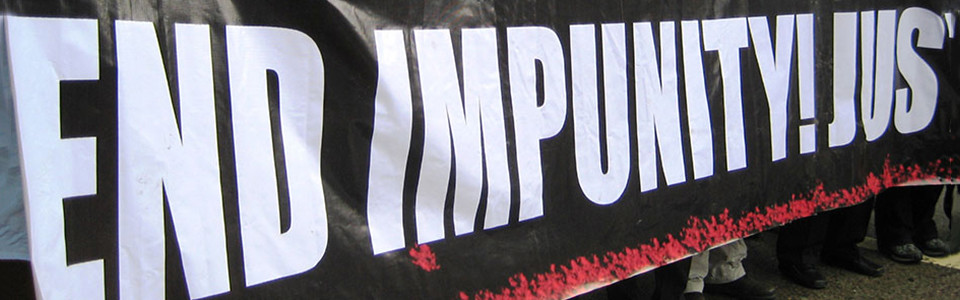
Taken up were six urgent topics, human rights in relation to: impunity, armed conflict, extreme poverty, women's rights, racism, protection and promotion of children's rights and racism, xenophobia and religious intolerance.

Ten years later, I ask, where are we now? I think of the scores of Filipino journalists who’ve been murdered in the past few years.

If you read the account by David Pitts on how the UN Declaration was drafted and signed 60 years ago, you'd be amazed that it saw the light of day. Eleanor Roosevelt chaired the drafting committee that included, among others, Charles Malik of Lebanon, P.C. Chang of China, John Humphrey of Canada and Rene Cassin of France. Chang had wanted something that “incorporate(d) the ideas of Confucius as well as Thomas Aquinas.”

UN member states at that time could not easily form a consensus on the rights of women and racial minorities, religious liberty, the point at which human life began, the extent to which freedom of speech should be protected, the right to dissent and economic and social rights. We're still at it, aren't we?

And the most serious disagreements, Pitts wrote, stemmed from the entirely different concepts of the West and the Soviet bloc of such human rights principles as freedom and democracy.

The Declaration, by the way, has no force of law, but it has inspired so many legally binding international covenants and agreements. It has survived. We must celebrate, and we must worker harder. I hope the next 40 years will be much better than the 60 that have passed.


Thursday, December 4, 2008

Filipinos in Obama’s America

On the night of Nov. 4 when Barack Hussein Obama was elected president of the United States, journalist and book author Benjamin “Boying” Pimentel took his eldest son to downtown Oakland where thousands of people were waiting for the officials results. They found people celebrating with cheers and tears. After more than 200 years, Americans had chosen a person of color to lead them forward.

“Pareng Barack: Filipinos in Obama’s America”, (Anvil) Pimentel’s latest book, is about Obama’s amazing rise to the presidency and, more importantly, about how Filipinos responded to his campaign and victory. “Often with excitement, sometimes with fear and dread,” Pimentel writes.

“Pareng Barack” is also about the Filipino journey in America, “how it has intersected, sometimes collided, with those of other communities, and how it has taken a dramatic turn as America enters a new era of anxiety and hope.”

Thursday, November 27, 2008

Fishers and fish

Nov. 21, Friday last week, was World Fishers Day. How many people in this country, fishers included, knew that? This nation of islands floating between azure skies and azure sea is home to fishers and fish. Yet, among the poorest of the poor among us are the small fishers who subsist on their daily catch that are dwindling by the day.

Those of us who try to live a meatless life or with little meat in our diet extol the greatness of the fish. The gourmets among us know the different flavors and textures in a fish head which non-Asians miss out on because they have a horror for detached body parts.

Fishers and fish were often mentioned and given symbolic meaning in biblical times. Several of Jesus’ disciples were fishermen, Peter among them. Jesus sent them off to the world with the words, “I will make you fishers of men.”

There are more instances when fish, fishers and fishing were in the heart of the bible stories—the multiplication of the loaves and fishes; the coin in a fish’s mouth that Jesus said should be sufficient for tax, and which Peter went to look for as he was told; the resurrected Jesus standing on the shore asking, “Friends, haven’t you any fish?”; then the casting of the nets and the drawing in of a huge catch. So many fishing scenes. Peter, the first Pope, was a fisherman.

Thursday, November 20, 2008

KFR in Zambasulta

The kidnapping for ransom (KFR) of veteran development worker Merlie “Milet” Mendoza in Basilan last Sept. 15, and her release on Nov. 14 (after ransom was paid) was the latest in a series of KFR cases in the Zambasulta (Zamboanga, Basilan, Sulu, Tawi-tawi) area.

The kidnappers, believed to be from the Abu Sayyaf Group of bandits, have seized all kinds and any one they fancied. Priests and religious, tourists, media practitioners, businessmen, students, development and humanitarian aid workers. Blood has been shed, lives have been lost. It’s all for the money. Terror and cruelty are their main weapons. Worse, they even gloat about their religious beliefs.

That development workers are not spared, as in the case of Mendoza and her fellow worker Esperancita Hupida, is something not unexpected. The bandits-terrorists spare no one. Now non-government organizations (NGOs) have to think many times about sending their workers to the dangerous places where these evil elements stalk their prey.

These NGOs are focusing on poverty-stricken areas in order to improve people’s lives. Poverty breeds criminality. Addressing the roots is key. But what do well-meaning workers get in return? Mendoza, a veteran development who used to work with Assisi Foundation and Tabang Mindanaw projects, was in Basilan to look into a water project when she and Hupida were seized. Mendoza is a consultant for Mercy Malaysia and the Asian Disaster Relief Network.

Thursday, November 13, 2008

Going organic, better late than later

What a surprise to learn that the government has gotten serious about pushing organic fertilizers and organic food production. This is indeed a major policy shift. I heard bells ringing and farm animals rejoicing and I imagined the citrusy, earthy smell of composting matter. Yes, all that and suddenly feeling the peace of wild things that Wendell Berry, prophet of rural living, spoke about.

The skeptic may view this government move as turning the public attention away from the raging multi-million fertilizer scam which is one of toxic-est this country has ever seen. One journalist was murdered because of this and the brains have yet to be brought to justice.

Whatever its motives, the Department of Agriculture (DA) could be but right to push organic. Can it sustain the campaign? How far will it go on the long and winding road? Agriculture secretary Arthur Yap who projects himself as a non-nonsense agri-crat should better put organic fertilizer where his press pronouncements are. And we better like this guy.

Thursday, November 6, 2008

We’re only hungry

No, we’re not starving to death, we’re only hungry.

The Philippines is again prominent on the hunger map. We landed fifth (or among the top 10) in Gallup International’s survey results on the world’s hungriest. Released on World Food Day last month, the results didn’t hit the news until recently.

It is said that very few people die of starvation. According to Bread for the World (Brot fur die Welt or BW), a Church-related development agency that has worldwide reach including in the Philippines, only a small percentage of hunger deaths are caused by starvation. Most hunger-related deaths are the result of chronic undernutrition, which weakens the body's ability to ward off diseases prevalent in poor communities. Most hungry people have some food, but not enough food or enough of the right kinds of food.

And so when people actually starve to death—because no food is available—the cause is primarily political, not environment-related. In North Korea, BW notes, untold millions starved because of the government's unwillingness to give up on failed economic policies. In Sudan, millions are threatened with starvation because of an ongoing military conflict that devastated the country's ability to produce food and because the government restricts the flow of emergency relief.