
UT IN OMNIBUS GLORIFICETUR DEUS.

UT IN OMNIBUS GLORIFICETUR DEUS.

UT IN OMNIBUS GLORIFICETUR DEUS.

UT IN OMNIBUS GLORIFICETUR DEUS.

UT IN OMNIBUS GLORIFICETUR DEUS.

Thursday, January 5, 2012

Cities be warned, prepare

Local government officials, citizens’ groups and NGOs in four Philippine cities should thank the World Wildlife Fund (WWF)-Philippines and BPI Foundation for undertaking research and publishing “Business Risk Assessment and the Management of Climate Change Impact.” It is subtitled “Vulnerability Assessment of Four Philippine Cities.”
The four cities are Baguio, Cebu, Davao and Iloilo. The words “risk” and “vulnerability” should turn the elected local officials of these cities into boy scouts and girl scouts (if they are not already) and make them swear by the motto “Be Prepared.” They should hit the ground running as early as now. But first, they should have the information.
Lazy local executives elsewhere who have seen the aftermath of Tropical Storm “Sendong” should be pressured to do some physical and mental aerobics by the riverbanks, lakeshores and mountain tops. Reading the WWF-BPI study is also a good start. The reading-challenged could practice some humility and seek explanations from the experts who are more than willing to share what they know, help them gather data and assess their vulnerability.

The WWF-BPI study begins with a national overview. It then takes on “an in-depth, city-specific view” and presents the methodology that was used, the scope of the assessment, analyses, scenario-building, adaptive capacity and integration and assessment. The study takes note of each city’s “socio-economic sensitivity”—its population, housing, source of income, educational facilities, businesses, water supply and even crime solution efficiency. It attempts “to look 30 years into the future” and encourages “out-of-the-box” thinking.

Here are excerpts from the WWF-BPI assessments per city. (You can ask for a soft copy of the study by sending an e-mail to kkp@wwf.org.ph.)

At barely 57 sq. km, Baguio City is the smallest and most densely populated city covered by this study. In the scoring process, it also emerged as the most vulnerable to climate change impacts. All historical records confirm that Baguio City has the highest rainfall in the country, and climate trends indicate that this is likely to get worse. From a climate point of view, the management of urbanization trends and watersheds as well as Baguio’s population growth will play roles in defining the continued viability of this city’s economy.

Thursday, December 29, 2011

'The man who planted trees'


I wrote the piece below for this space 20 years ago, in 1991 (with a different title). I share this again to honor those who have been guarding our forests with their lives, in memory of the thousands (almost 2,000 dead and some 1,000 still missing) who perished in the Dec. 16 flash floods, landslides and log slides that roared into parts of Northern Mindanao and the Visayas, and in solidarity with the grieving, hungry, homeless and hopeless.

Tropical Storm “Sendong” is not entirely to blame. Earth watchers have been crying out in the wilderness, subsisting on the proverbial locusts and wild honey, unheeded in their own woebegone country.

While re-working this piece I was listening to the Enya album, “The Memory of Trees” and thinking of all the real Christmas trees out there that have protected us. I pray for brightness on the road ahead, “charged with the grandeur of God.”
                                                                * * *
When you remembered that all this had sprung from the hands and the soul of this one man, without technical resources, you understood that men could be as effectual as God in other realms than that of destruction. —from “The Man Who Planted Trees”

A story I read as a little girl and which I remember very well to this day (in fact the copy is still preserved at home in the province) is that of Johnny Appleseed. I remember his saucepan of a cap, his bright eyes and the fistful of apple seeds he strew around wherever he went.
Children keep things in their hearts and remember even when they become adults. After these many years I still remember how good I felt reading that picture story in the Junior Classics Illustrated. How Johnny Appleseed made the bare fields bloom and when he was old, how he marveled at the work of his hands and how he died a happy man and how the birds in the apple trees chirped his name long after he was gone.
I remember as I go over this warm little book which my friend, a farmer, lent to me. The book, “The Man Who Planted Trees,” comes with audio (text and music) which can be played while one is reading the book. Listening and reading—slowly, meditatively—takes 40 minutes. (This is now on YouTube!) The story is by Jean Giono, the illustrations (such exquisite wood engravings) by Michael McCurdy. A noted French writer, Giono has written more than 30 novels. He died in 1970 at 75.

The name of the man who planted trees is Elzeard Bouffier. Giono said the purpose of his story “was to make people love the tree, or more precisely, to make them love planting trees.” Through Giono, we first meet Elzeard Bouffier before the outbreak of the First World War, then when the war is over, then again before the outbreak of the Second World War and finally at the end of it.

Giono, the storyteller, describes where he first met Bouffier: “About 40 years ago I was taking a long trip on foot over mountain heights quite unknown to tourists, in that ancient region where the Alps thrust down into Provence. All this, at the time I embarked upon my long walk through these deserted regions, was barren colorless land. Nothing grew there but wild lavender.”

In this god-forsaken land lived Bouffier, “a man of great simplicity and determination.” Bouffier, who had lost his wife and children, resettled in this desolate place in Southern France. With only his dog and sheep for company, he started his monumental work—planting a hundred acorns every day of his life.

Thursday, December 22, 2011

Season of immense grieving, immense giving

Storm “Sendong” struck in the wee hours when most people were asleep. Weather experts and forecasters were stunned upon beholding the aftermath of Sendong’s force and fury. But it was not Sendong’s wrath from the sky alone that caused the destruction. Elements on the ground conspired—silted rivers and congested riverbanks, poor urban drainage systems, denuded forests. It was not all Sendong’s fault. There surely will be a time for fault-finding. It didn’t have to be as bad as this.

And yes, this had been predicted three years ago, foretold, if you may, not by armchair doomsday soothsayers, but by individuals and groups that have been working on the ground and using science so that the authorities and their constituencies could be forewarned and be prepared. They were laughed out of the room. (Read “Sendong disaster foretold 3 years ago” by Kristine L. Alave, Inquirer, 12/20/11.)

Everything in words has been said about the immensity of the grief of the people who survived last weekend’s calamity that visited the cities of Cagayan de Oro and Iligan as well as other Mindanao and Visayan areas. But there are not enough words.

Almost a thousand dead and countless still missing. The counting continues. The live images of devastation that stream on the TV screen, the still images on print, the wailing, the weeping. Dead people, dead animals, debris, mud, water, wreckage, decay. Hunger, thirst, disease, and worst of all, immeasurable loss. How to go on living when one’s loved ones have been suddenly swept away without warning, only to be found lifeless in the most unlikely places, disfigured and wrapped in sticky mud?

We think we have seen enough tragedies in this world. But sometimes our defenses are pulled away suddenly and we experience the rawness of it all. On TV one beholds a solitary mother squatting and cradling her muddied baby, limp and lifeless. There are no tears in her eyes, no words from her lips, but on her mouth is a frozen scream. You find yourself breaking into sobs.
Journalists don’t easily shed tears. Or we seldom do. Not when we are on coverage. There is a protective shield that we put between us and the subject matter before us so that we don’t cross the divide. The shield or armor could take the form of a tape recorder, a microphone, a camera, a notebook, a moving pen. The deadline. The press ID. These set us comfortably apart. And when everything is over, we think we can stand up and easily leave, leave behind all that we have caught in our electronic gadgets or on paper and proceed to write in isolation about the discomfiting scenes we have witnessed, the tearing grief, the despair.
But that is not always the case. There are times when one has to lay down one’s arms, so to speak, and simply listen and be there because that is the best way to catch it all (the journalist switching to another mode). Or because it is the human thing to do.

I recall the time I was at the Payatas dump right after it collapsed on hundreds of waste pickers and on hundreds of homes around it. That was in July 2000. The most heart-rending scene for me was not how the dead bodies were being pulled out one after another from under the foul heap. It was watching a man who was waiting for his dead mother, pregnant wife and child to be brought into the chapel. They were among the first to be found, placed in coffins and brought to the chapel near the dump.

Thursday, December 15, 2011

'Dominus est!"

Philippine Daily Inquirer/OPINION/by Ma. Ceres P. Doyo

“But in our weariness the Lord comes.” That is a quote from the homily of newly installed Manila Archbishop Luis Antonio G. Tagle DD delivered on Dec. 12 at the Manila Cathedral.
At that moment of recognition, at that moment when we finally see clearly, we gasp in awe, “It is the Lord!” Dominus est! This exclamation, Tagle reminds us, is drawn from the Risen Christ’s appearance to some of his weary disciples at the Sea of Tiberias. It is, I must say, one of the most dramatic post-Resurrection scenes in the Bible. “Dominus est!” is Tagle’s episcopal motto.
We are a long way from Eastertide. We are in the Advent season of waiting and crying out, “Maranatha!” But somehow, “Dominus est” seems apropos in this time of weary waiting.

The announcement on the papal appointment of Tagle, 54, as head of the Philippines’ most prominent archdiocese and his installation last Monday was among the few pleasant news events this Advent season. And so we gratefully say goodbye to retiring Archbishop Gaudencio Rosales who is known for his gentle leadership and love for the poor.

For weeks now we have been barraged with unsettling news that put us on edge and in near despair. Even as we embark on seeking justice for past wrongs done by the powerful, even as we long to see evildoers pay for their evil deeds, so many roadblocks are placed along the way. Will the big fish get away?

Thursday, December 8, 2011

25 Years: Nobody told me it'd be like this


Twenty-five years and some 2,000 feature articles, special/investigative reports, and column pieces later, here I am still asking: Why didn’t anyone tell me it would be like this?

I’ve had an amazing time. Amazing, meaning I have been privy to so many things of this world that other mortals are not because “they are not there.” Oh “to be there” where people live and die, feast and famish, laugh and cry, to be there where events unfold and to watch history leave its tracks behind for us to decipher and to be sometimes awed and humbled enough to make us fall on our knees in thanksgiving and sometimes in mourning.
To be there where the heavens opened and hell broke loose. To watch great lives, small lives, dirty lives, fascinating lives, beautiful lives, incredible lives rise and fall, bloom, break into a thousand pieces or become whole again.
On Wednesday, 44 employees, I among them, were honored for 25 years of service to the Philippine Daily Inquirer and its mission. We are this year’s Silvers. Also honored were those who have completed 20, 15 and 10 years with the Inquirer. For every milestone, the Inquirer gifts us with a precious token in gold—real gold. And more.

Dec. 9, 1985 is the actual founding date of the Inquirer, now the country’s biggest in circulation and with a staggering global reach. So Friday is the Inquirer’s 26th anniversary. I’ve been with the Inquirer for 25 years and nine months. I joined on March 5, 1986, a few days after the People Power Revolution that toppled the Marcos dictatorship. Before that, I had already been contributing articles to the Inquirer, a new kid on the block then, and also to its feisty sister, the weekly Mr. & Ms. Special Edition (published by Eggie Apostol and edited by Letty J. Magsanoc) and to the so-called “alternative/mosquito press.” These publications played a huge role in bringing down the dictatorship.

We had paid a price for all that daring. And a price we also later demanded. Last February, a number of us in the press got our first taste of justice in the form of initial compensation from the Marcos estate. We were among the almost 10,000 victims of human rights violations who had filed a class suit against the Marcoses. But that is another story.

A day after the 1986 February Revolution, I received a call from Letty Magsanoc. I was asked to join the Sunday magazine of the three-month-old Inquirer. “You start tomorrow,” she told me. And I was to fly to Leyte right away to look into the fabulous treasures left behind by Imelda Marcos who would have been turned into tiny bits by the mob that descended on Malacañang Palace had she not fled on time.

Although I was a feature writer for the magazine, I also wrote occasionally for the daily. In 1995, I asked to move to the daily so I could write more investigative and special reports. Just recently, I asked to be transferred back to the magazine, although I could also still write features for the daily. I began writing this weekly column, Human Face, in the Opinion section, in July 1991.

Sunday, December 4, 2011

Bukid Kabataan: A place to be strong, to belong


The happy shrieks of children blend with the sonorous mooing of the cows. The striking green of the fields compete with the blueness of the sky. The patter of little feet, the chorus of voices in the classrooms, the rising of the nuns’ chanted prayers at eventide…

Space, quiet, fresh air, dew on the grass, good food, warm arms and the healing embrace of nature. But here above all, is the child, the child who needs to become whole again.

Bukid Kabataan Center (BK), which means children’s farm, is a special place, a home for children who have never known one or who had watched theirs fall apart. Here they slowly claim their stolen childhood, name their pain and bind their wounds with the help of caring adults.
The children vibrate with energy, laughter and songs. But behind the innocent eyes and carefree mien is deep pain that these children are helped to confront. There are bright moments and bad moments. There is a time to drink the sun and a time to weep oceans.
At 9, Melan (not her real name) had already decided for herself how to fix her life, step out of her trauma and move on. Raped repeatedly by her grandfather and ostracized by her family because she was going to make a case of it in court (with help from legal and social services), she found herself in a bind.

Then Melan made a dramatic bargain. She would not testify so that the case against her abuser would be dropped – but on condition that she would never be returned to her family or next of kin, and that her family should release her for legal adoption.

Thursday, December 1, 2011

Gawad Kalinga's European tour of hope


As stories about corruption, crime and violence continue to hog the limelight like telenovelas gone awry, we become filled with disgust and search for answers to the question, how have we come to this? But out there are countless stories of hope that remain untold simply because we choose to look at the noisier, bloodier, sexier, more scandalous and titillating side of things.

I recently spoke with Antonio Meloto, founder of Gawad Kalinga (GK), RM Awardee and Inquirer’s 2006 Filipino of the Year and felt a surge of hope. I have written several stories about him and GK, some written long before accolades were heaped on them. The recent one I did was on GK’s Enchanted Farm in Angat, Bulacan, which is a showcase and center for social innovation (CSI). The center is part of GK’s second phase: a 21-year vision with a road map towards a First World Philippines.
There, nestled on 14 hectares of verdant, undulating terrain is a farm, home, village and “university” rolled into one, where people’s dreams and ideas are put to the test, made to grow and become realities.
Many European students and volunteers have spent time not only at the Enchanted Farm but also in remote GK villages where they lived the life of the locals. They brought home with them amazing stories of Filipino resilience, innovation and hope.

When Meloto recently did a hectic tour of 17 universities in France and England, he was met with great enthusiasm. Among those he visited were Oxford, Cambridge, Leeds and Sorbonne. Students, academics, social scientists and regular folk wanted to know more about GK and hear it straight from Meloto.

Meloto’s European tour was arranged by Olivier Girault, an executive of Orange Telecom, who has great affection for the Philippines and deep compassion for the poor. For Meloto to cope with the backbreaking schedule, Girault put Meloto on an “8888 formula: 8 hours of sleep and 8 glasses of water daily; 8 speeches and 8 meetings a week.”

Meloto shared with me his reflections on his university tour. Waxing Shakespearean, he said, “From France to England, GK smells as sweet.” That trip, he said in one breath, was part of “my continuing journey of hope for the world to see the Philippines as the next miracle of Asia and for our people to discover the awesome gift from God and the amazing privilege of being Filipino today.”

I now let Meloto speak in his own words. If you want the whole transcript, send me an e-mail.

Thursday, November 24, 2011

Filep Karma, prisoner of conscience


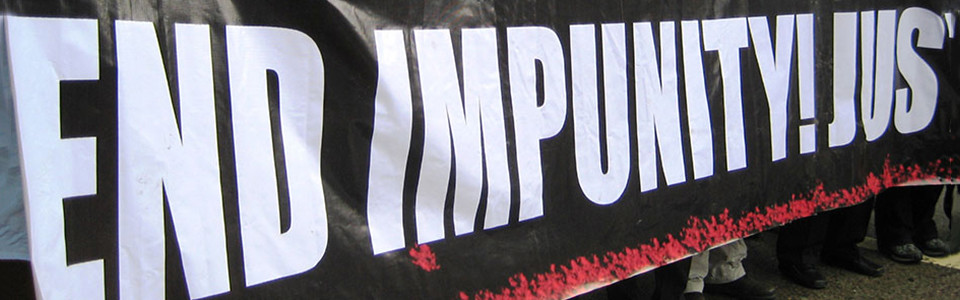
Again, to explain: The columnists’ mug shots show closed eyes this entire week, our way of proclaiming solidarity with victims of crimes and their families who have doubly suffered because of the culture of impunity which has allowed those guilty to remain unpunished or to be above the law. This week also marks the second anniversary of the massacre of 58 innocents, 32 of them media practitioners, which happened in Ampatuan, Maguindanao. Although some masterminds and other suspects are now behind bars, the judicial process proceeds at a slow pace and the families of the victims have yet to get the justice they are crying for.
We close our eyes to pray, reflect and remember.

And while we continue to keep vigil for our suffering fellow Filipinos, it is also fitting that we take up the plight of our immediate neighbors. An Indonesian journalist, who now works for Human Rights Watch and specializes in human rights abuses in West Papua, asked me if I could spare some space for a Papuan political prisoner. (We met in East Timor in 1995.Our Filipino group and several foreign Human Rights Watch workers were, at that time, among those hastily kicked out of the island after our presence was discovered by Indonesian intelligence.)
The man of the hour is Filep Karma, proudly Papuan (but with Indonesian citizenship), who has been languishing in jail for some six years because he expressed his desire to see his fellow Papuans and his homeland free from Indonesian rule.
Last week, Karma won his legal case in the United Nations Working Group on Arbitrary Detention. Karma, sometimes called “the Nelson Mandela of West Papua,” is probably the most well-known political prisoner in Indonesia. It used to be Xanana Gusmao, whose case I had followed and whom I had written about during Timor Leste’s protracted bloody struggle to gain independence from Indonesia. Heavily tortured while in prison, Gusmao would later become the first president of his new country. I wept upon seeing their flag raised for the first time.

It is now West Papua’s turn to be heard. Karma is the voice of a people’s hope for freedom. Karma is detained at the Abepura prison in Jayapura. He wishes his Filipino friends and alma mater to know about his plight and take up his cause. Karma lived in the Philippines from 1997 to 1998 while studying at the Asian Institute of Management in Makati.

Karma was thrown into prison on Dec. 1, 2004, after he raised high the Papuan Morning Star flag at a political rally that commemorated the Papuans’ independence from Dutch rule.

Karma, who has explicitly denounced the use of violence, was convicted for crimes of hostility against the state and sedition. He is now serving a 15-year sentence despite calls for his release from NGOs and government officials. He is suffering from a prostate problem.

Karma recently won his case before the UN Working Group with the help of his pro bono lawyers from Freedom Now, a Washington-based NGO which also represents Nobel Peace Prize laureate Liu Xiaobo of China. The same group represented Aung San Suu Kyi of Burma.

Thursday, November 17, 2011

Smokey Mountain's rainwater eco-laundromat


Smokey Mountain, the internationally known garbage dump that the media, social scientists, activists, environmental advocates, politicians and religious groups had so often visited, is no more, but the name, the symbol, the actual spot remains. For a long time, many visitors who experienced the shocking poverty and amazing endurance of those who earned their living through scavenging there had hoped that Smokey Mountain, this shameful symbol of Philippine misery, would vanish, if not transmogrify into something else.
Well, it did, thanks to the efforts of many concerned groups, individuals and the government. Tondo’s Smokey Mountain, the garage dump, is no more. The story of its transformation, the stories about the lives of the people who once lived on garbage could fill books. (There is a coffee-table book.) Where once there was a dump whose toxic fumes quietly killed many, there are now some two dozen five-story tenement buildings that house more than 2,000 families.
But the place is far from pleasant because poverty is still the lot of those who live there. Many of the residents still thrive on garbage, but now in a more organized, ecologically friendly way. Now in place is a materials recovery facility (MRF) where useful garbage (collected from institutions, homes, streets) are deposited, classified and segregated.

Last week I was in what used to be the Smokey Mountain dump. The last time I was on Smokey Mountain was when it was still a garbage mountain. Many “alternative” activities had been done there in the past, like exposure trips for visiting NGOs and the like. I remember joining a Holy Week Stations of the Cross there, organized by a militant church group immersed among the urban poor. At the end of the para-liturgy, Jesus Christ’s cross was fittingly planted on top of the dump. That gave us a feel of Calvary cum deadly fumes.

Today there is still a small portion of the mound that remains unleveled, but it is covered with grass, shrubs and some trees. The sad thing is that poor families are starting to set up homes there. There’s still a lot that can be scavenged and excavated, I was told, like pieces of wood that can be turned into charcoal. In fact, many are now into charcoal-making, a very unhealthy and environmentally damaging endeavor that needs to be checked. Young children who help out emerge from their smoke-filled lean-tos looking like troll dolls covered with soot. I hope to go back there to check things out.

So what bright spot am I talking about?

Thursday, November 10, 2011

Crime, showbiz, politics and 'other families'


Also guns, money, power and treachery. They make for a long-running telenovela.

The only telenovela I ever followed closely was “Falcon Crest,” which ended in the 1990s. The plot got so corny and convoluted toward the end that I lost my interest in the final episodes. That’s why I don’t remember how it ended. I only remember the earthquake that rocked the wine valley.

That was before Mexican telenovelas became so popular and addictive here. After the success of “Mari Mar,” Philippine TV networks imported more of them and the rest is history. Locally produced Filipino teleseryes are now here to stay and competing with Korean soaps almost all hours of the day and night. This phenomenon is a great subject for social researchers.

And now a true-to-life teleserye unfolds in the media, with the Revilla/Bautista clan in the limelight. For about two weeks now, the hourly news and the daily newspapers have been “serializing” the progress in the investigation of the crime that rocked a known political and showbiz clan of Cavite.

The plot and subplots are getting more and more interesting as characters past and present, dead and living, are woven into the story. There should be more to come in the form of flashbacks and fast-forwards. One thing about this real-life teleserye is that it serves up surprise after surprise every step of the way. Those who have been following the developments from Day One can’t seem to have enough of the twists and turns in the plot. A scriptwriter of fiction would be amazed at how this true story is unfolding.

Sunday, November 6, 2011

He sees dead people & they confess to him

At three o’clock in the morning, while the world sleeps, troubled souls rouse this priest to relay important messages or confess their sins so they can move on gently and finally to eternity. The otherworldly messengers include Navy officer Phillip Pestaño who came back to tell the world that his death was not a suicide as some officials would have us believe. Another group of souls gathered by the priest’s bedside and told him they were victims of the 2009 Maguindanao massacre.

The apparitions initially puzzled Fr. Efren Borromeo of the Society of Our Lady of the Trinity (SOLT). Affectionately called Fr. Momoy by Bicol folk, he thought it was just one of those things. “I was reluctant to recognize it,” he says. “I know saints have soul visitations, but I am not a saint!”

Ghostbuster, spirit questor or saint, the label doesn’t matter. People whose lives he has touched agree that Fr. Momoy has the gift of healing the sick and seeing souls. He also has the ability to see through human bodies and reveal with uncanny accuracy what ails those who consult him, just like the radiology method called MRI or magnetic resonance imaging.

Though not a medical doctor, Fr. Momoy has basic knowledge of the human anatomy and is in fact, on his way to becoming another kind of doctor. He is finishing his dissertation for a doctorate degree in cosmic anthropology at the Asian Social Institute in Manila.
His cosmic encounters do not scare him, Fr. Momoy confides. In fact, he considers them a nuisance. “I would ask, why do you have to come for confession? Why don’t you go direct to heaven? Nakakaistorbo kayo (You guys are a bother).” But the souls continue to turn up at all hours of day and night. “That’s why I can’t drive,” he says. “I see dead people.”
One group he couldn’t just ignore because of their sheer number showed up in the dead of night. “Who are you, why are you so many?” he had asked. They were, the apparitions answered, the victims of the Maguindanao massacre. (In that November 2009 tragedy, 58 people, most of them media practitioners were brutally killed and buried in shallow graves. The main suspects, the members of the Ampatuan political clan, are now in jail and on trial.)

Thursday, November 3, 2011

7 billion stories


After the official announcement by international population experts that the number of human beings living on Planet Earth reached the seven billion mark on Oct. 31, 2011, after events have been staged and symbolic 7 billionth babies have been presented, photographed and assured of a good future, after the number crunching has been done and pop population puzzles have been created and solved (e.g., it will take 200 years for one person to count aloud from 1 to 7 billion, that is, if he or she lives that long)… what now?

There are many sites on the Internet that tackle the “7 billion” watchamacallit. Is it a phenomenon, a problem, a feat, a failure? National Geographic (NG) has come out with a series on the “7 billion” during the past months. If you are a subscriber you would have a billion interesting stuff to read.

NG and Apple’s iTunes have even come up with the free “7 billion app,” an application that would allow you to browse, read, listen to and watch so many things related to the “7 billion” so-called. But this could only be done on an iPad. iTunes alone on your PC or laptop would not work. And since I do not have an iPad, I could not tap into the breathtaking stories, photos and graphics. I clicked what were clickable and got a good idea of what it was all about.

But there are other interactive sites on the “7 billion,” like the one offering syllabi for school teachers and two-minute video contests for the young. (The majority of winners showed their worry about water supply.)
One site, called “7 Billion Actions” was put up by the United Nations Population Fund (UNFPA). One of its features is “7 Billion Stories” that invites everyone to share their stories (and a photograph, of course) and what they could do to make this world of 7 billion a better place.
The stories (600 characters maximum) are heartwarming, inspiring and spontaneous. I found several from the Philippines. You could add yours. Don’t be shy to shout from the rooftops and tell the world about what you do. The crooks of this world strut about with impunity and even brag about their stealing rights, so why hide the good that you do under a bushel? Your story is your digital pledge on cyberspace.